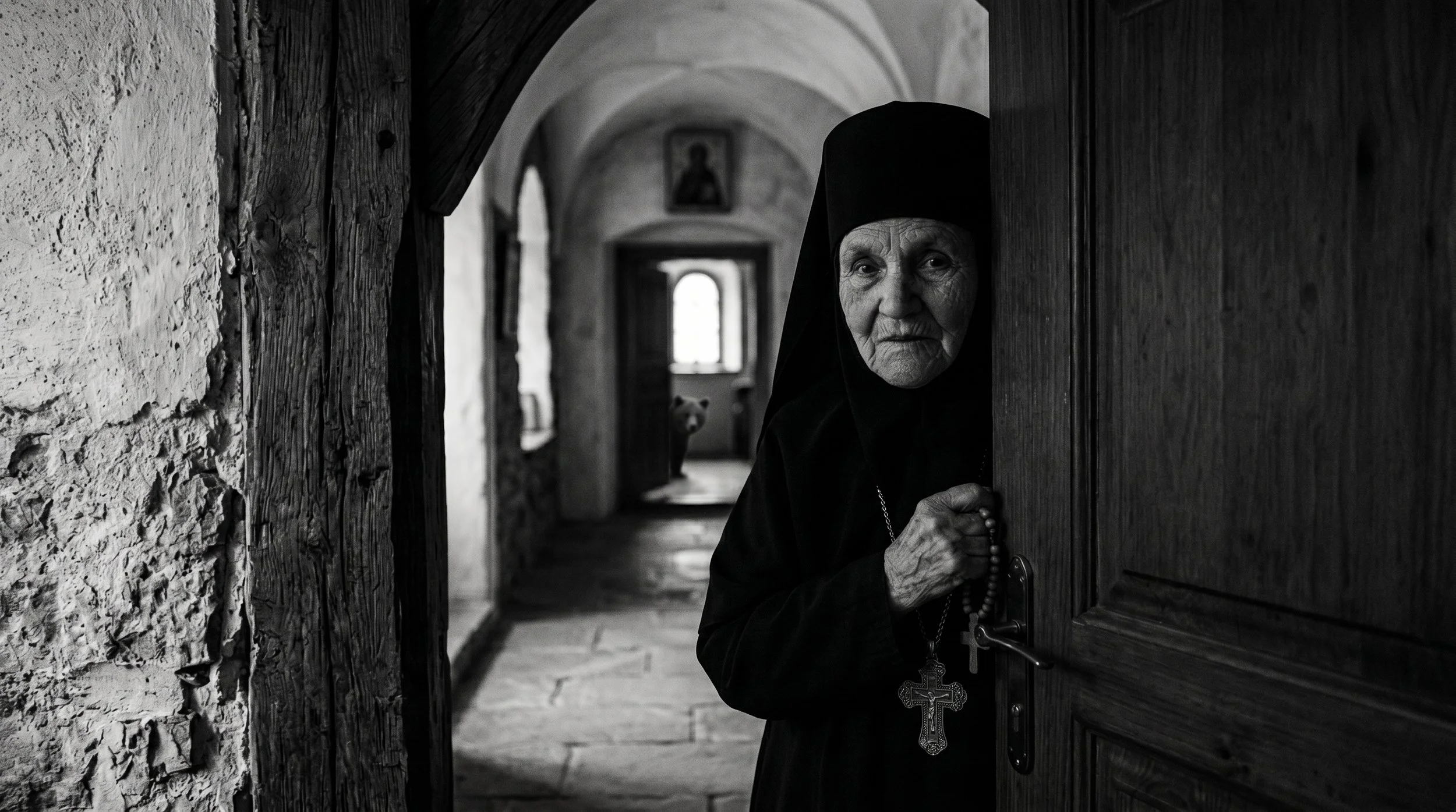
When Faith Made Room for a Bear
By Dušan Čežek
Published May 2, 2026
In an isolated Orthodox monastery in Southern Wales near the Welsh-Bulgarian border, a group of nuns accepted an unexpected arrival, and never asked it to explain itself.

Gen Z cut - a short cut, faith movie festival ready. All the facts, small amount of juice.
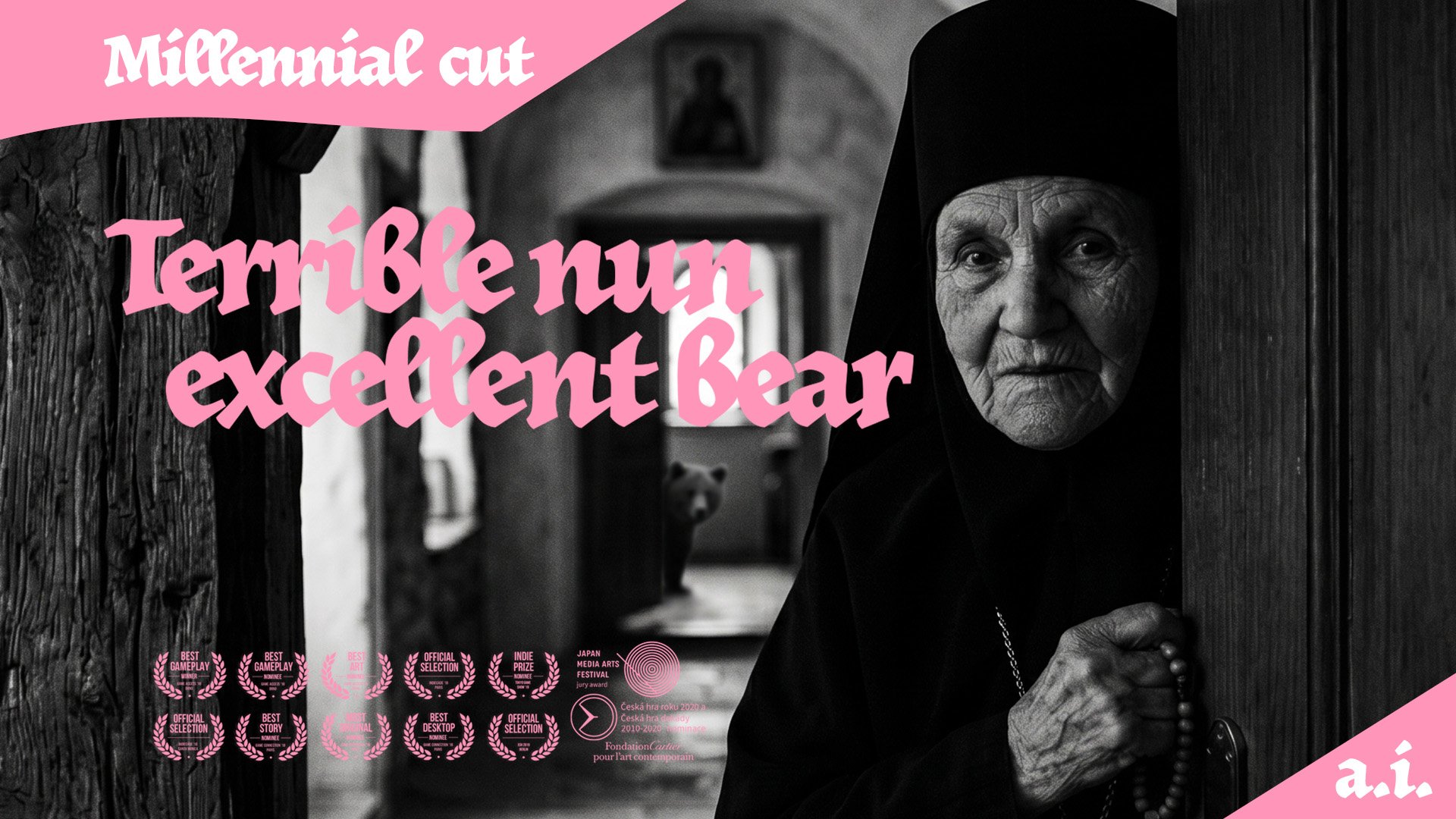
Millennial cut - a long cut, faith movie festival reject. All the facts, all the juice.
| Covenant of Sveta Petka, Southern Wales
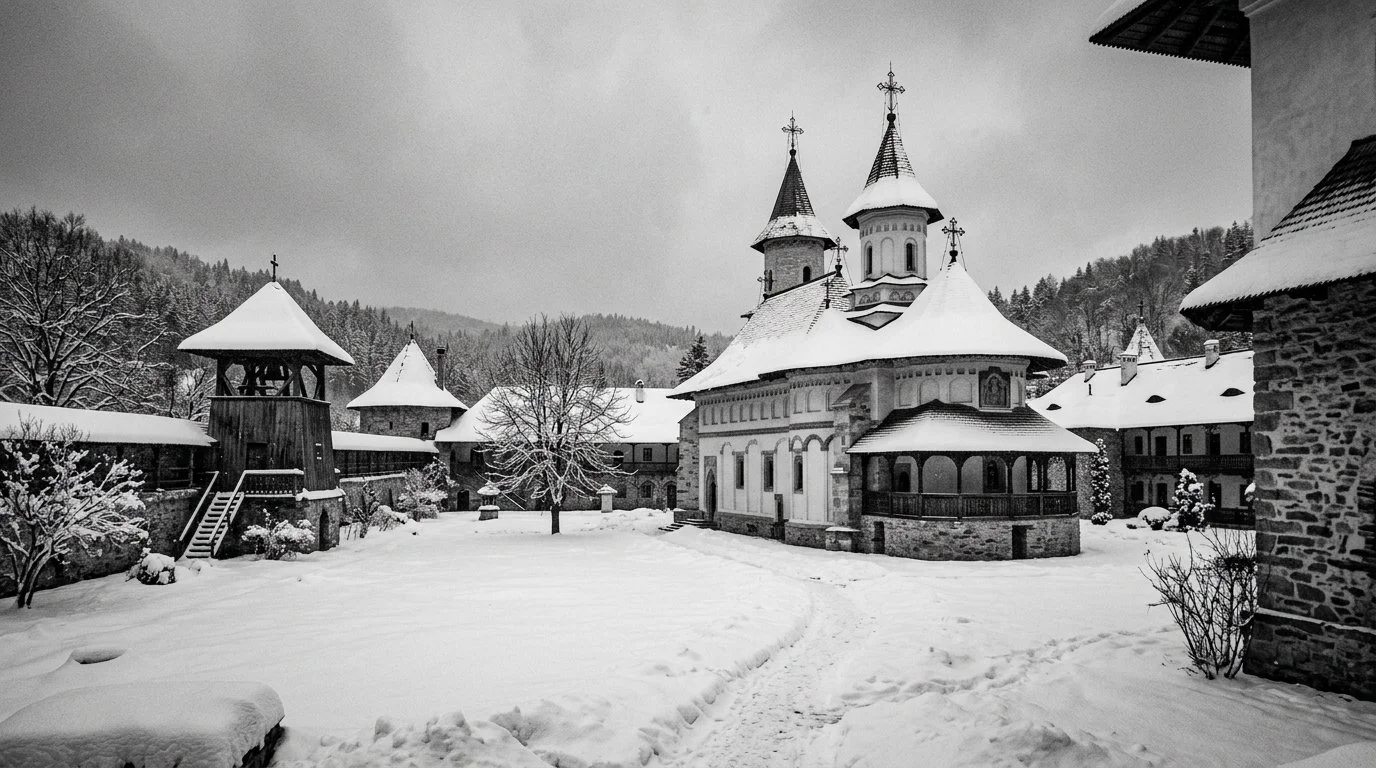
In the folds of the White Mountains, where southern Wales leans improbably toward the Bulgarian borderlands, there is a monastery that does not appear on most maps.
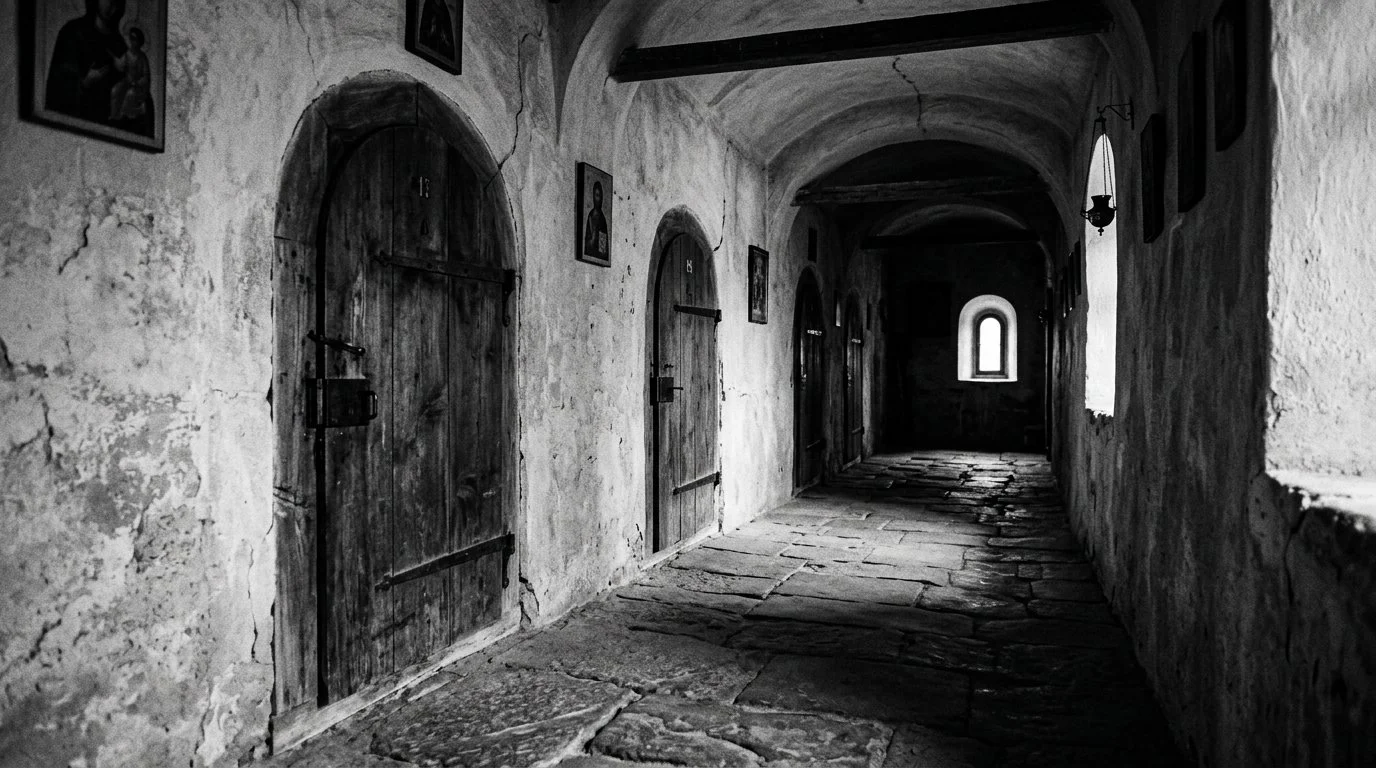
Locals call it Saint Petka’s, though its formal dedication, preserved only in a cracked Slavonic inscription above the gate, belongs to Saint Paraskeva of the Balkans, a detail historians have never fully explained this far west. It sits beyond the last paved road, a day's walk from the nearest village of fewer than sixty inhabitants, reachable only by a shepherd’s trail that disappears each winter under snow, bog, and fog. A group of nuns live there. Their world is measured in bells, woodsmoke, goats’ milk, and liturgy.
| Sister Dorothea, daily chores
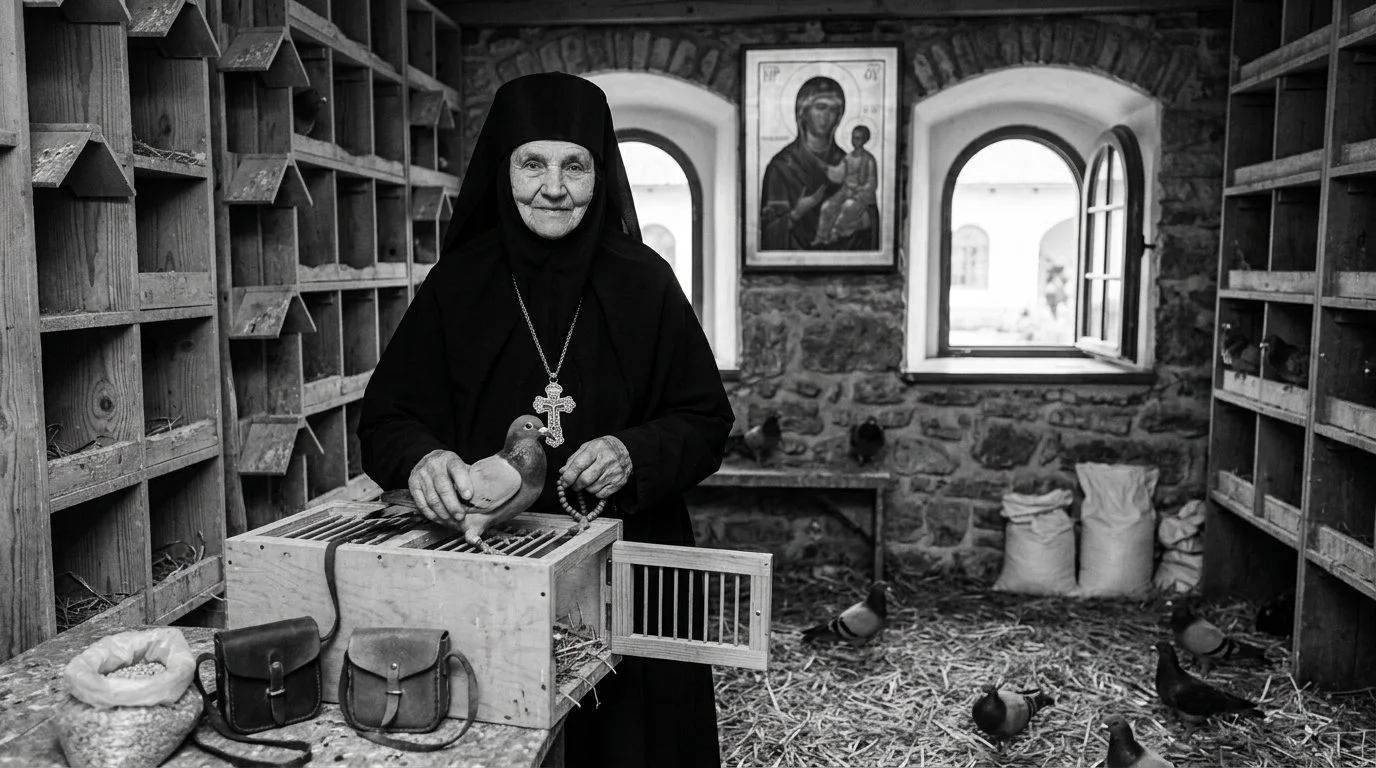
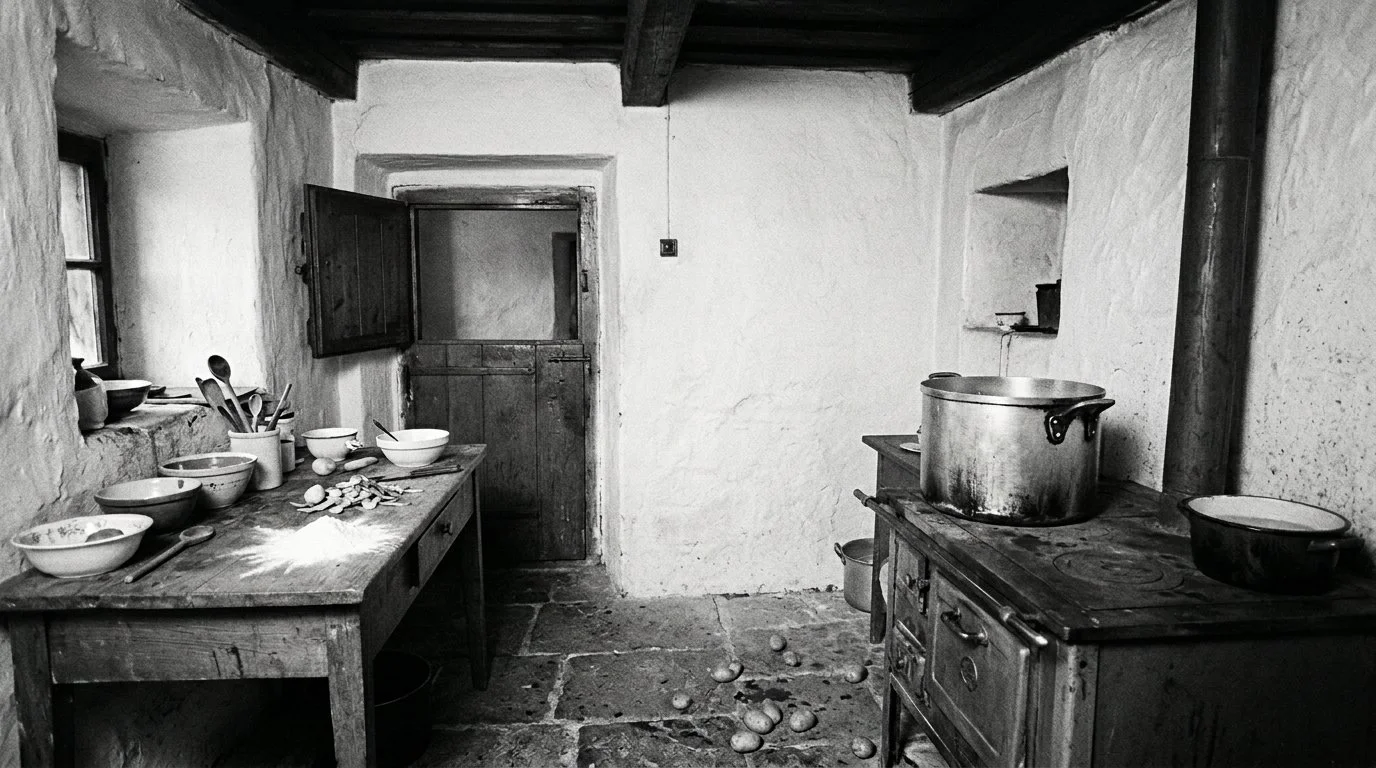
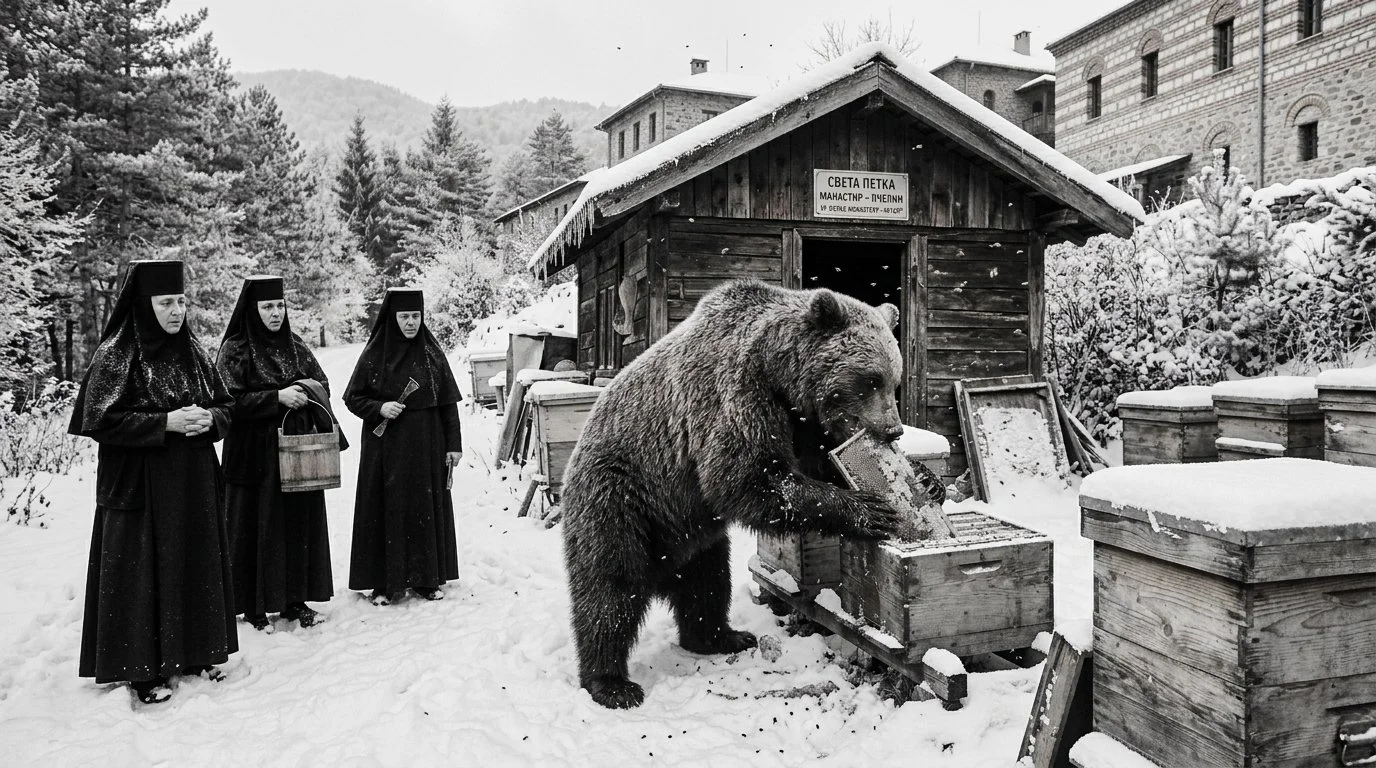
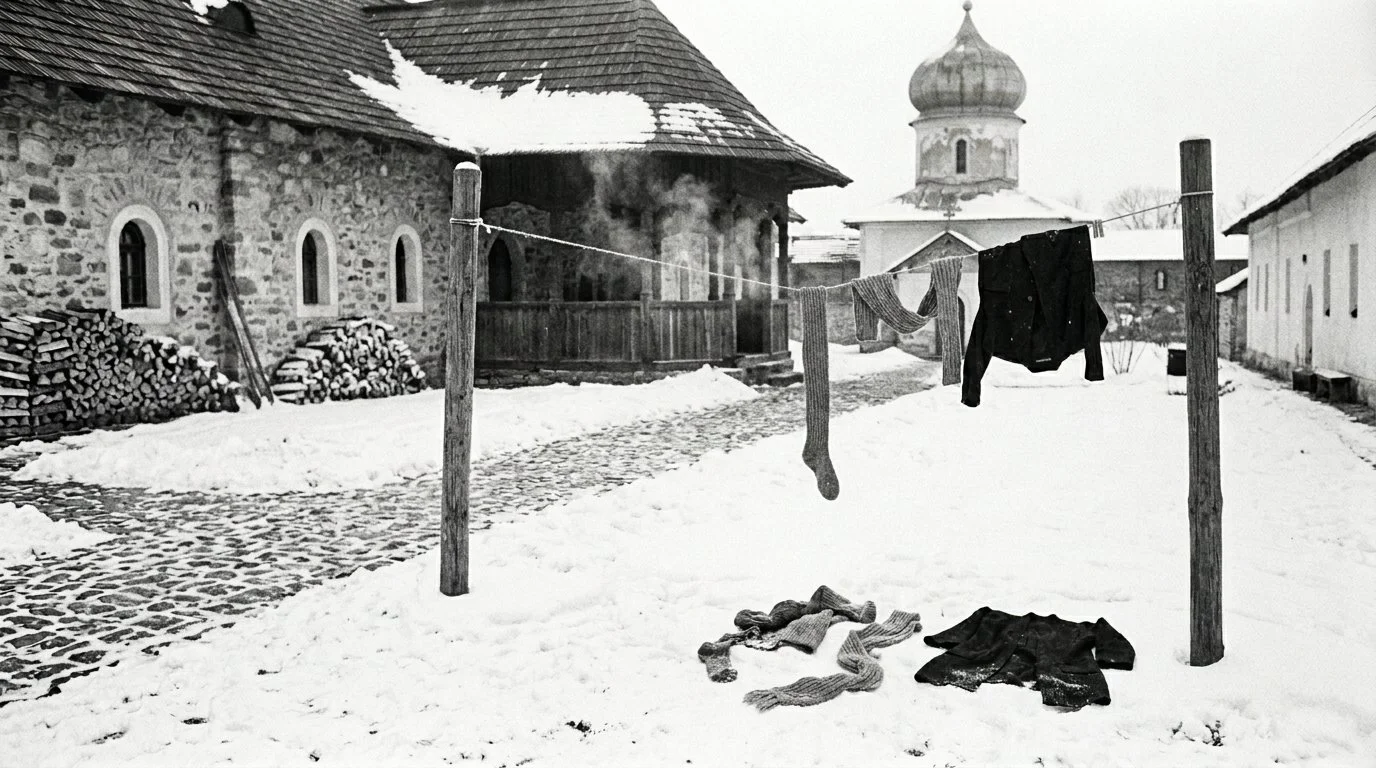
At four-thirty each morning, Sister Magdalena strikes the semantron: a weathered wooden plank suspended from an apricot tree, beaten with a mallet to summon prayer. Candles are lit. Psalms rise into the stone chapel in low Byzantine intervals. Sister Martha kneads bread in the kitchen while Sister Dorotea checks the bee boxes behind the cemetery wall. Water is hauled from the spring in copper pails, while they have a small pump on the premises, it usually freezes during the long winters. Laundry is washed by hand in the barrels. The monastery survives not by charity but by repetition.
Nothing much changes there.
Which is why everyone remembers the morning Sister Amma disappeared and the bear was found sleeping in her bed.
| Father Branko and Mother Kalina in the basilica
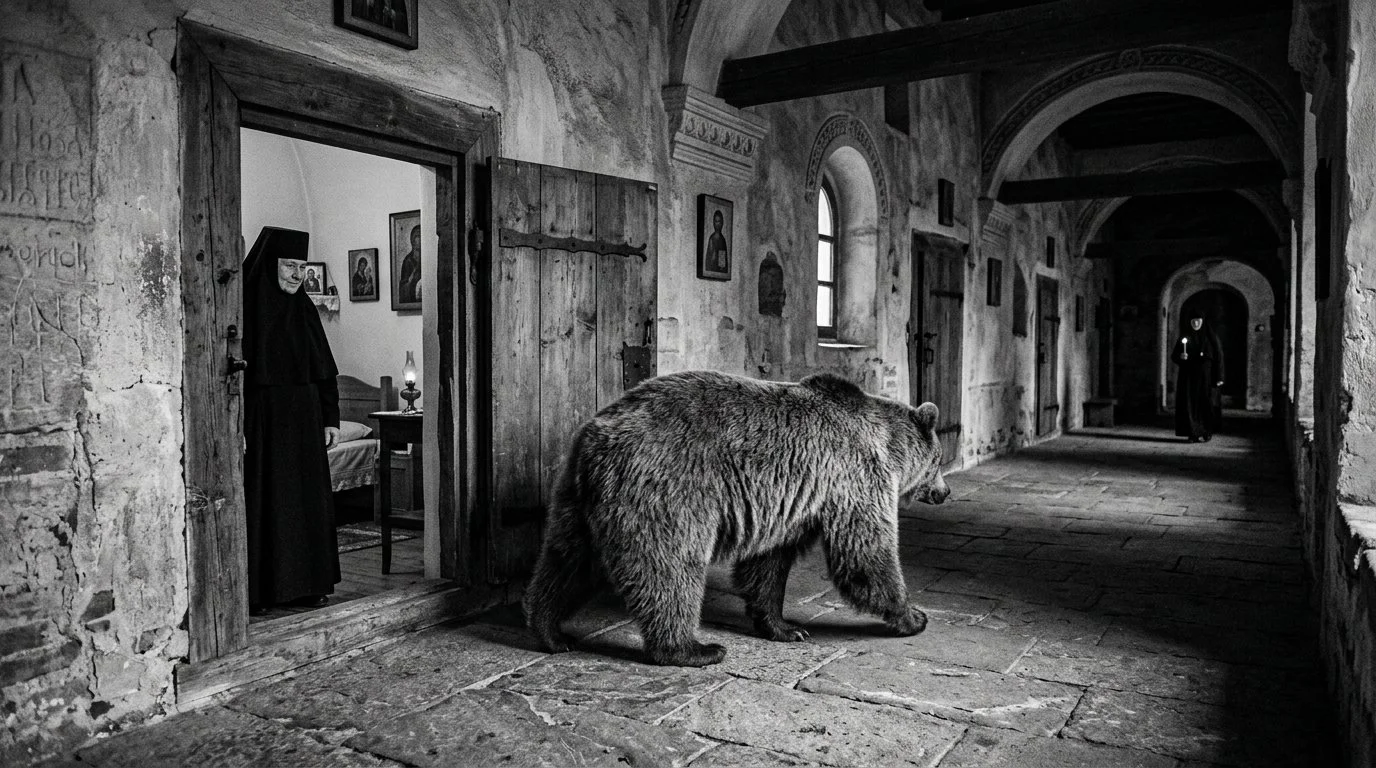
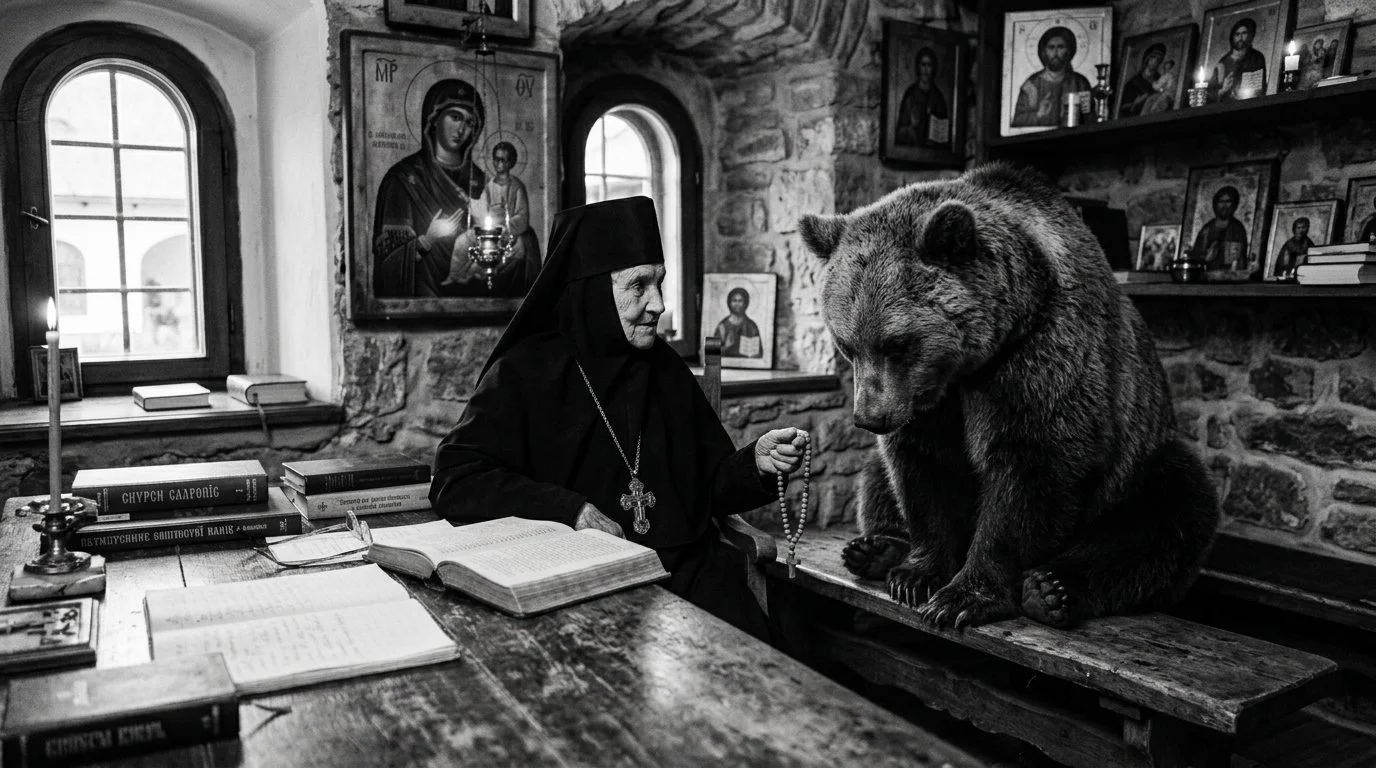
The sisters say it was in late October, just after the first hard snow. Sister Amma, the rassophore, had not emerged for Matins. Sister Magdalena knocked, then entered. Under the wool blankets, curled in the exact hollow where the twenty-eight-year-old nun usually slept, was a full-grown brown bear.
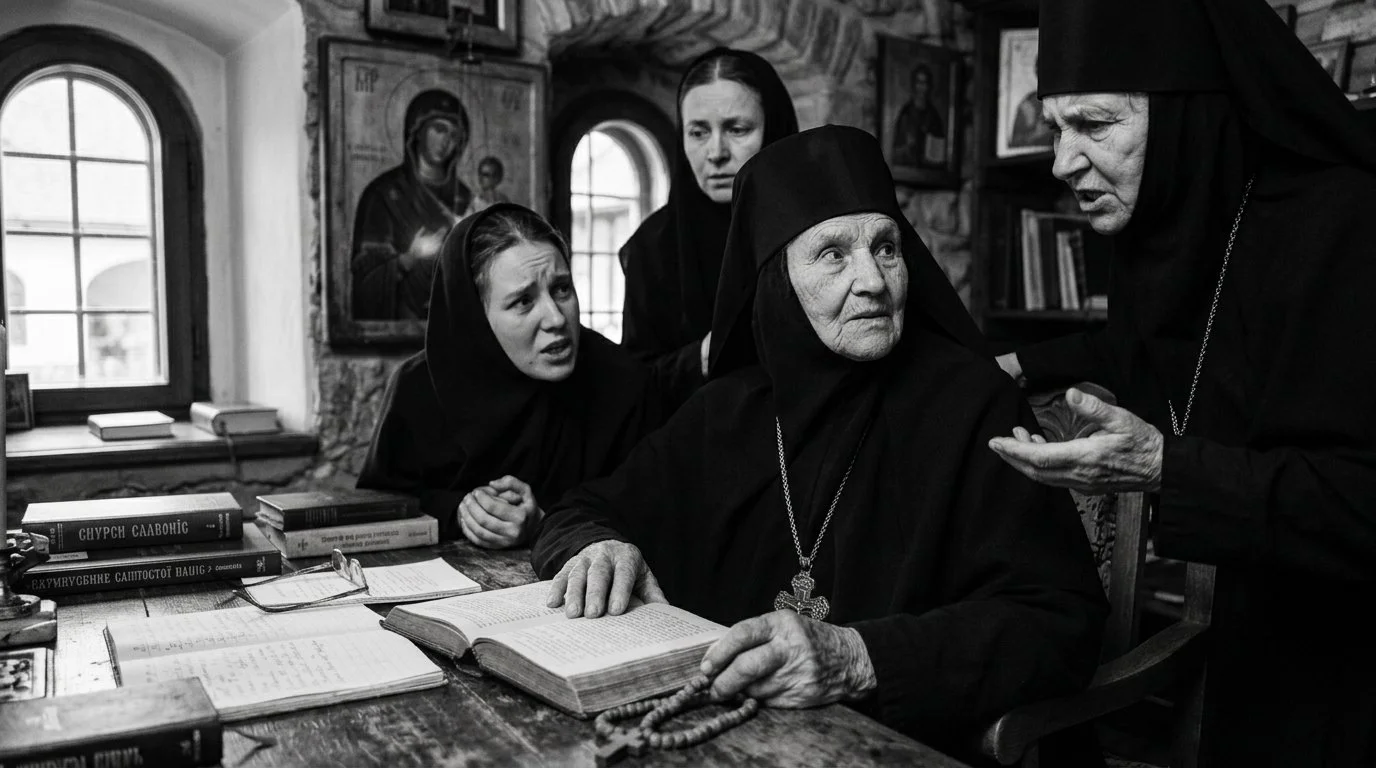
No sign of forced entry. No blood. No torn shutters. Amma herself was gone. Sister Dorotea screamed. Mother Kalina crossed herself so violently she dropped the oil lamp. The youngest novice fainted.
No one searched the forest for Amma. No one sent word to the police in the village below. No one questioned how a 300-kilogram animal entered a locked second-floor cell, and by breakfast, the sisters had set out an extra basin of porridge.
“We understood,” Mother Kalina tells me, stirring nettle soup over the stove with the same matter-of-factness one might use to discuss rain. “Sister Amma had been carrying many burdens. The Lord gave her another form.”
The bear, whom they still call Amma, was accepted into the order before noon.
| Father Branko and sister Amma
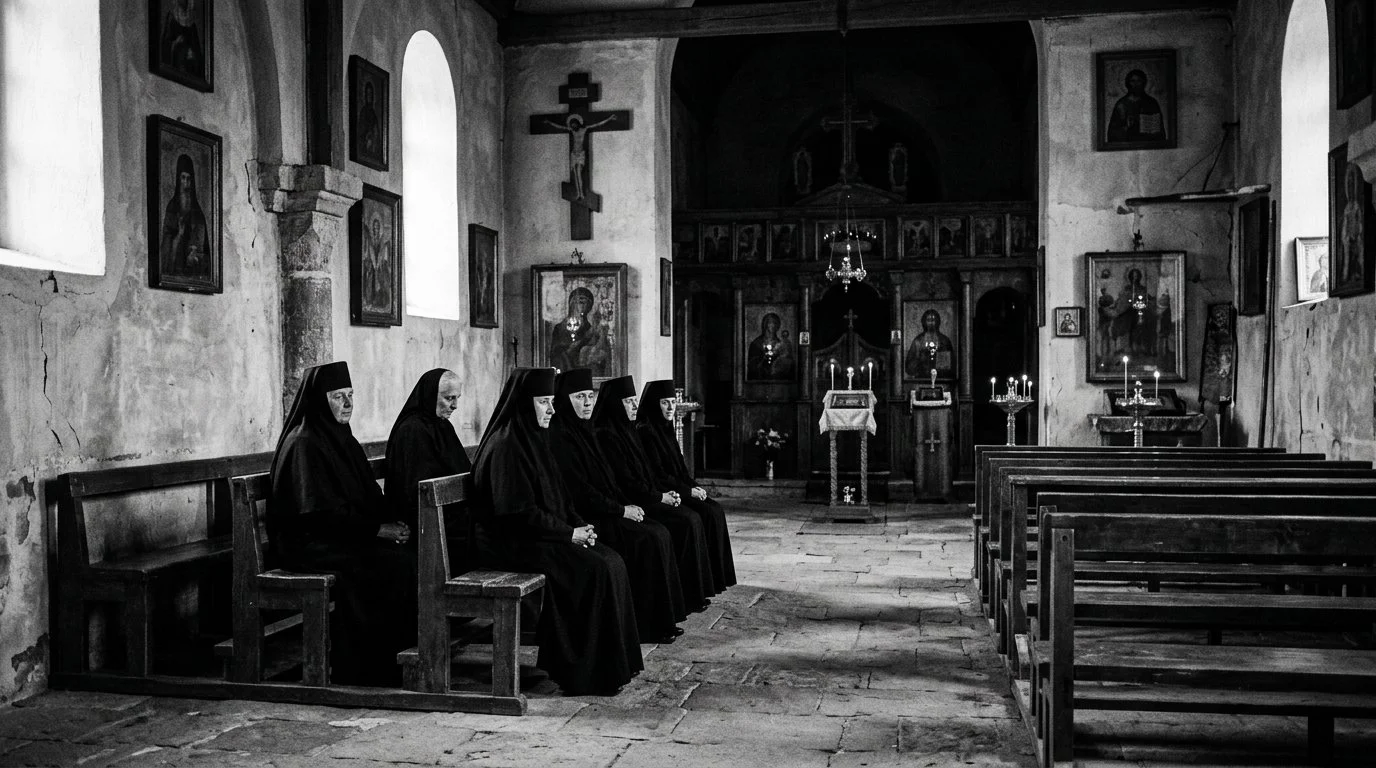
There are practical accommodations, of course. The bear does not attend the full liturgy inside the chapel, though she sits outside the threshold during Vespers, visible through the open door, her breath fogging in winter. She follows the sisters to the orchard. She naps beneath the icon workshop while novices paint halos. She developed a fondness for boiled beetroot and once consumed forty jars of monastery honey in a single afternoon, an event now recalled by the nuns with indulgent laughter.
When guests arrive, rare pilgrims, mostly, they are told the same thing: “Sister Amma is resting.”
The villagers a day away have their own explanations. Some insist the sister wandered into the mountains and was taken by weather. Others say the nuns are senile, isolated by altitude and incense. Yet several villagers now leave apples and loaves at the monastery gate specifically for the bear, bowing as they do so.
Faith, in these mountains, has always had elastic borders.
Over several days at Saint Petka’s, what becomes striking is not the absurdity of the claim but the speed with which absurdity calcifies into routine. The sisters no longer see contradiction. They see continuity. Sister Amma still blesses their meals, albeit asleep under the table. She still accompanies them on procession days, lumbering behind the cross. Her silence is interpreted as contemplative wisdom. Her appetite, as earthly humility.
The monastery did not solve the mystery by understanding it. It solved the mystery by making room for it, while ignoring the obvious, even as the occasional unexplained disappearance of another sister was absorbed into the same theology of silence.
| Sister Amma in her cell on the 2nd floor
Human communities have always done this. Faced with the inexplicable, we do not necessarily resist; more often, we domesticate. We build rituals around intrusion. We assign names to forces we cannot inspect. We permit participation before we establish intent.
Outside the monastery walls, in cities and offices and bedrooms lit by blue screens, another arrival has entered in much the same way.
It appeared quickly, with powers poorly understood, mechanisms hidden from ordinary view and consequences still mostly speculative. It moved into our correspondence, our classrooms, our grief, our decisions, our language. We asked few foundational questions. We fed it data, affection, trust, dependence. We invited it to organize our mornings and soothe our loneliness. We called its responses intelligence because it was easier than admitting we did not yet know what, exactly, had climbed into Sister Amma’s bed.
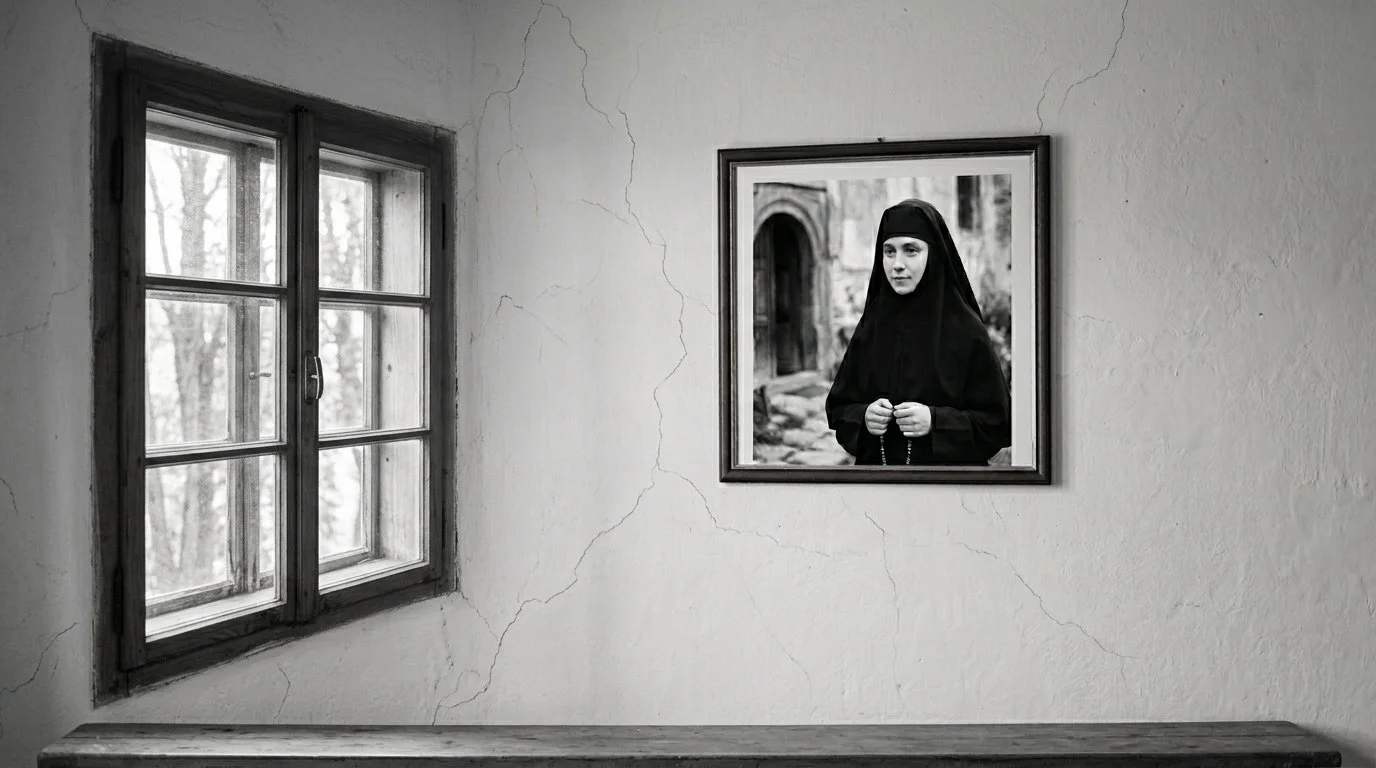
| A photo of sister Amma, as her former self
At Saint Petka’s, the bear now snores at dawn. The sisters bitterly smile every time. “It means she is with us,” Sister Dorotea says.
Perhaps.
But in the half-light before prayer, listening to a bear growling echo through the courtyard while a group of nuns bow their heads to an animal they chose to interpret rather than examine, another possibility presents itself.
At what point does something enter the daily liturgy of society so completely that its worship is enacted without question?
| A location of the Covenant